In today’s hyper-connected world, where smartphones are practically glued to our hands and social media notifications bombard us constantly, the concept of a digital detox has never been more relevant. But what exactly does it mean to detox from the digital realm, and why should we bother?
The Digital Deluge:
Let’s face it; our lives are increasingly intertwined with technology. From the moment we wake up to the moment we go to bed, we’re inundated with screens, notifications, and endless streams of information. While technology undoubtedly offers incredible benefits and conveniences, it also comes with its downsides.
The Need for Detox:
Studies have shown that excessive screen time can lead to a host of negative effects, including increased stress, anxiety, and even depression. Constant connectivity can disrupt sleep patterns, hinder real-life social interactions, and leave us feeling overwhelmed and burnt out.
Rediscovering the Analog World:
A digital detox offers a much-needed break from the digital noise, allowing us to reconnect with the world around us in a more meaningful way. Whether it’s spending time outdoors, immersing ourselves in a good book, or engaging in creative pursuits, unplugging from technology can provide a refreshing change of pace.
Mindfulness in the Digital Age:
Detoxing from technology isn’t just about disconnecting; it’s also about cultivating mindfulness and being present in the moment. By stepping away from our screens, we give ourselves the opportunity to fully engage with our surroundings and appreciate the simple pleasures of life.
The Benefits of Unplugging:
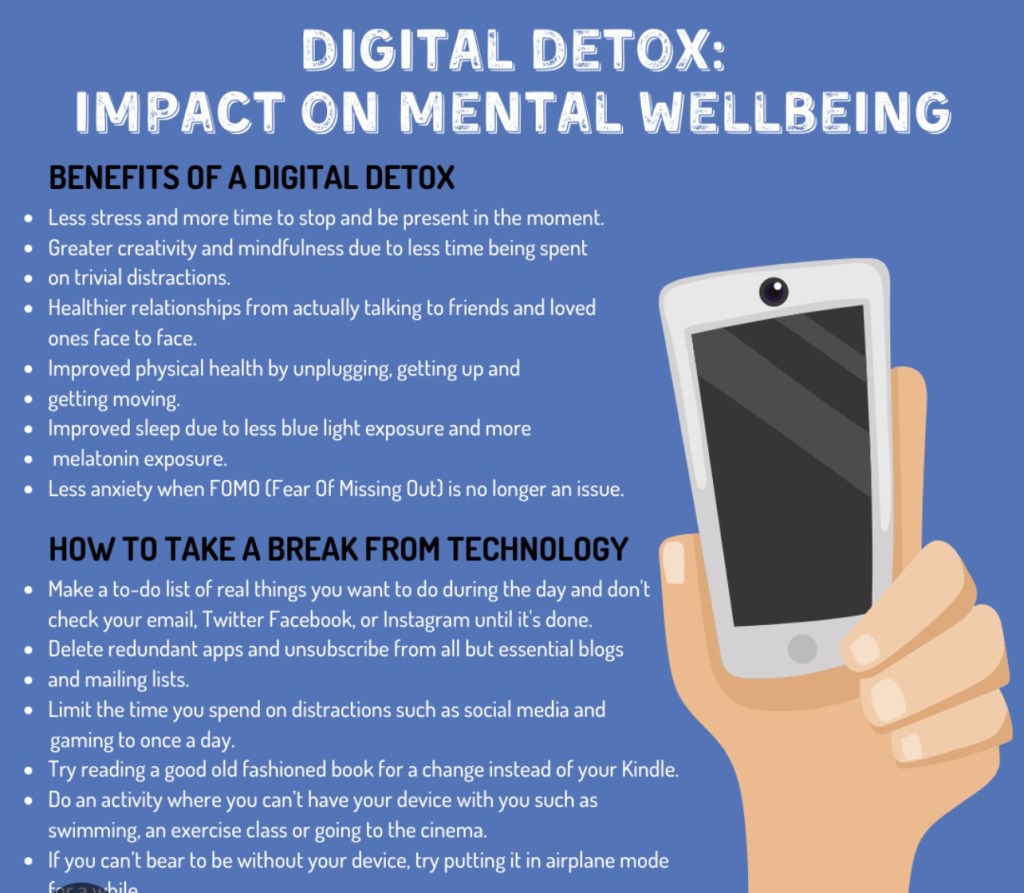
The benefits of a digital detox are numerous and far-reaching. Not only can it improve our mental health and well-being, but it can also enhance our productivity, creativity, and overall quality of life. By reclaiming our time and attention, we can focus on the things that truly matter to us.
Tips for a Successful Detox:
- Start small: Begin by setting aside short periods of time each day to disconnect from technology.
- Set boundaries: Establish clear boundaries around when and how you use technology, and stick to them.
- Find alternative activities: Explore new hobbies and activities that don’t involve screens, such as gardening, painting, or yoga.
- Practice self-care: Use your digital detox as an opportunity to prioritize self-care activities, such as exercise, meditation, and spending time with loved ones.
Conclusion:
In a world that’s constantly buzzing with digital noise, taking time to unplug and recharge is more important than ever. A digital detox offers a chance to rediscover the joys of life offline, cultivate mindfulness, and reconnect with what truly matters. So why not give it a try? Your mind, body, and soul will thank you for it.


 Chapters on Wheelz
Leave a comment