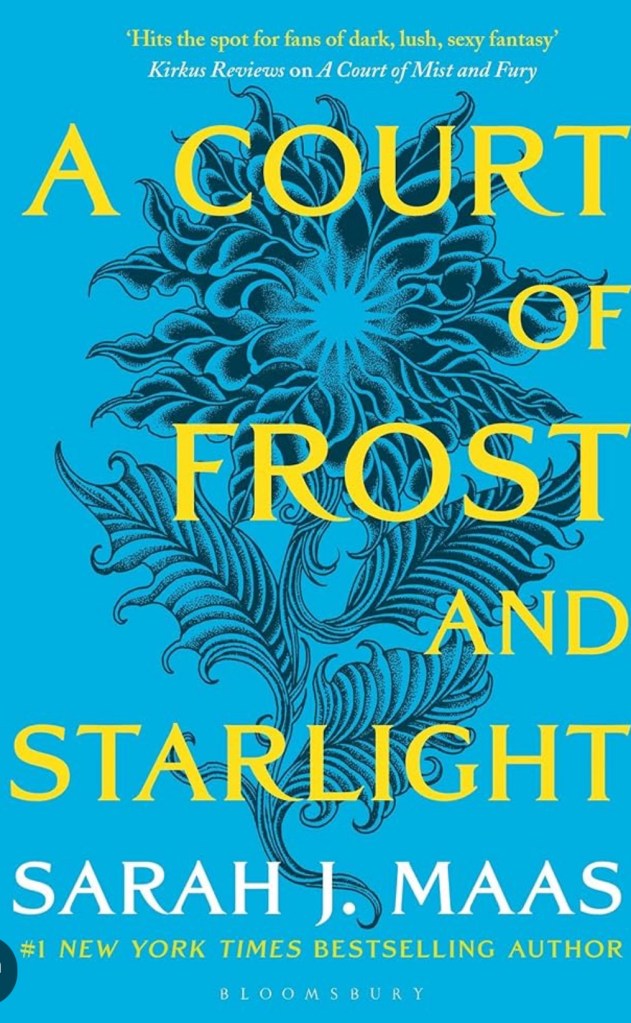
When I picked up A Court of Frost and Starlight, I was curious about how Sarah J. Maas would bridge the events of A Court of Wings and Ruin and the future of the Night Court. This book is different from the previous entries in the A Court of Thorns and Roses series—it’s quieter, more introspective, and a necessary breather after the tumultuous events that have shaped these characters’ lives. While A Court of Frost and Starlight may not be a sweeping epic of battle and intrigue, it shines in its exploration of healing, relationships, and the subtle tensions that arise in a world rebuilding itself.
The first thing that struck me is the tone. It’s like stepping into a soft, cold snowfall after being in the midst of a storm. There’s an air of festivity, of celebration, but also a lingering sense of unease. The characters are not the same as when we first met them. War has changed them. Maas crafts this transitional phase beautifully, offering insight into how even the strongest of individuals must grapple with the aftermath of trauma and the fragility of hope.
Feyre, our ever-resilient protagonist, is grappling with her new reality. Throughout this book, her struggles aren’t centered on survival but on finding a way to thrive. What resonated with me was how Maas gives space for Feyre to explore her vulnerabilities. She’s now a High Lady, a role she never anticipated, and while there’s strength in her new position, there’s also a profound sense of loss. The weight of the decisions she’s made, the lives she’s impacted, and the battles fought are heavy on her shoulders. I found myself appreciating the slower pacing of her character arc here. It allowed for an intimate reflection on what it means to move forward when the world expects you to be whole, even if you’re still putting the pieces back together.
Rhysand, as ever, is a source of comfort, charm, and strength. However, even he is not immune to the aftershocks of war. His relationship with Feyre remains one of my favorite aspects of this series, and A Court of Frost and Starlight gives us plenty of moments to savor their connection. There’s a maturity in how they interact, a depth in their bond that transcends the surface-level romance we often see in fantasy novels. But it’s not without its challenges. Maas subtly weaves in the tension of two individuals who have fought battles together, but now must learn to navigate the quieter, more personal battles of their relationship and their future. It’s a refreshing change of pace and serves as a reminder that love isn’t just forged in the heat of war but also in the calm that follows.
One of the aspects I loved most was how A Court of Frost and Starlight delves into the dynamics of the broader cast. Nesta, in particular, stood out for me. Her coldness, her anger, her self-imposed isolation—all of it feels raw and real. Maas doesn’t shy away from portraying her as deeply flawed, which I appreciated. Nesta is hurting, and while it might be frustrating to see her push others away, it’s also a realistic portrayal of someone grappling with guilt, trauma, and a sense of unworthiness. There’s an undercurrent of tension in her interactions with her sisters and the Inner Circle, and I found myself intrigued by where her story would lead.
Cassian, ever the steadfast warrior, also had moments that made me pause. His dynamic with Nesta is charged with emotion, and while there’s no grand resolution in this novella, the groundwork is clearly being laid for something more. The way Maas writes these quieter, tension-filled moments between characters gives the book an emotional depth that lingers long after the final page.
Then, there’s the backdrop of the Winter Solstice, a time of celebration and reflection. Maas uses this setting to contrast the external festivities with the internal conflicts each character faces. It’s as though the snow and the cold mirror the frozen, unresolved emotions within the group. While they come together to celebrate, there’s an undeniable undercurrent of unfinished business, of conversations left unsaid, and feelings unacknowledged. For a novella that’s ostensibly about a holiday, it’s surprisingly bittersweet at times, reminding us that joy and sorrow often coexist.
What makes A Court of Frost and Starlight stand out in the series is that it isn’t about saving the world. It’s about learning how to live in it after it’s been torn apart. Maas excels at portraying the smaller, more intimate struggles of her characters, and that’s where this novella shines. It’s a story of healing, of finding joy in the mundane, and of accepting that even after victory, there is still much to be done on a personal level. It’s a slower, quieter book, but one that feels necessary. It’s a reminder that life isn’t just about the grand battles we fight, but also about the moments in between—the moments that shape us just as much as the wars we wage.
In the end, A Court of Frost and Starlight isn’t a grand, sweeping narrative. It’s a reflective pause, a look at the emotional and personal costs of war, and the slow process of healing that follows. For anyone expecting the high stakes and explosive action of the previous books, this novella might feel understated. But for those who are invested in the characters and their emotional journeys, it’s a rewarding, introspective read.


 Chapters on Wheelz
Leave a comment