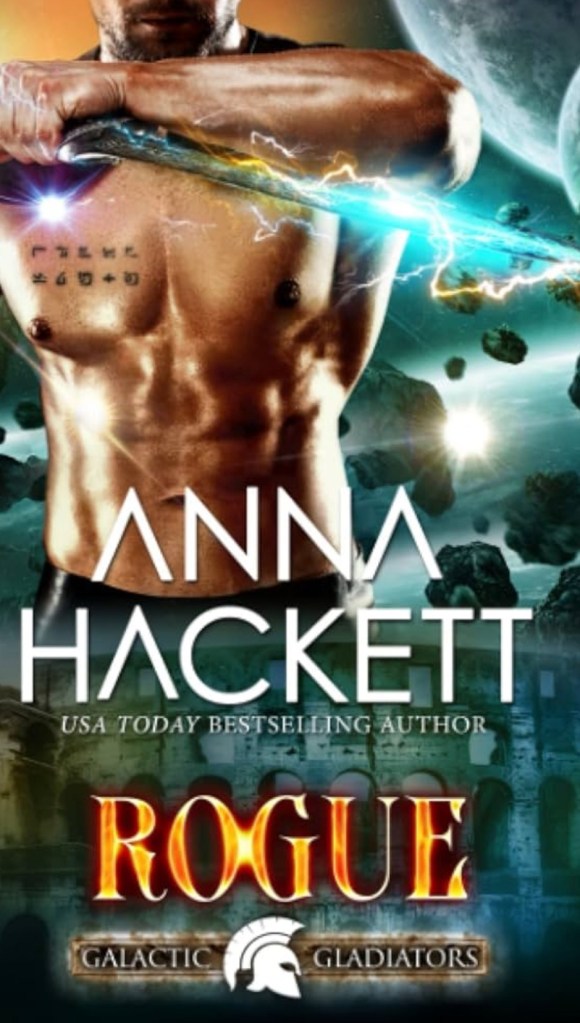
Anna Hackett’s Rogue takes readers on a relentless, adrenaline-fueled journey, mixing intense action with a searing romance. With each book in her Galactic Gladiators series, Hackett manages to build upon the intricately crafted world of Carthago, where warriors and rogues alike find themselves battling not just the outside forces of evil, but also the turmoil within their hearts. Rogue stands out not only for its fast-paced plot but also for the deeply emotional stakes embedded within the characters’ arcs.
Having already experienced Hackett’s knack for melding action and romance in her previous works, I was prepared for another rollercoaster ride. But Rogue took me by surprise in more ways than one. Right from the first page, I was pulled into a story where danger and desire go hand in hand, and where love blossoms amidst chaos. There’s something about Hackett’s ability to capture the balance between these two forces that makes her books so compelling, and Rogue is a testament to that skill.
At its core, Rogue is a love story. Yes, it’s set against the backdrop of intergalactic threats, brutal enemies, and battles for survival, but beneath all that, it’s about two individuals fighting for their right to love in a world that constantly tears them apart. The central characters embody that rogue spirit – living on the edge, defying expectations, and challenging the limits of their emotions and trust in each other. It’s a classic Hackett dynamic, but with layers of complexity that made it hard to put the book down.
From the moment we meet the protagonist, it’s clear that they’ve been through hell and back. This is a character shaped by their past, hardened by the challenges they’ve faced, and yet somehow, Hackett manages to infuse them with a vulnerability that’s both heartbreaking and inspiring. The protagonist isn’t just a one-dimensional hero; they’re flawed, scarred, and sometimes make decisions driven more by fear than logic. And that’s what makes them so relatable.
I found myself rooting for them from the beginning, not just in their quest for justice or vengeance, but in their journey toward healing. Hackett does a remarkable job of showing how love, in its rawest form, can be both a salvation and a burden. Watching the protagonist wrestle with their emotions, trying to reconcile the need for connection with the fear of losing it, felt incredibly authentic. It’s a struggle many of us can relate to, even if we’re not fighting space pirates or navigating deadly gladiator arenas.
Then there’s the love interest. As with many of Hackett’s romantic pairings, this character is equally complex, bringing their own baggage and strengths to the relationship. What stood out to me about this particular romance was the sense of equality between the two leads. Neither one is there to save the other – instead, they challenge each other, pushing one another to grow and evolve. There’s a palpable tension in their interactions, not just from the external threats they face, but from the internal battle of wills. It’s a slow burn in the best way, with moments of tenderness woven seamlessly into the more high-octane action sequences.
And let’s talk about that action. Hackett knows how to craft a fight scene. Every punch, every blast of energy, every narrow escape feels visceral and real. The pacing of the novel is relentless, but it never feels overwhelming. Just when you think you can catch your breath, another twist hits, keeping you on the edge of your seat. But what I appreciated most about the action in Rogue was that it always served the characters’ emotional journeys. The battles weren’t just there for spectacle; they were integral to the story’s progression and to the protagonists’ growth.
In Rogue, Hackett also explores themes of loyalty, betrayal, and redemption in a way that feels fresh, despite being age-old tropes. The protagonist’s past is riddled with betrayals, and their journey toward trusting again is fraught with tension. Trust, or the lack thereof, is a major theme that permeates every interaction. It’s fascinating to watch as the characters struggle with their own demons, trying to figure out who they can rely on in a universe where trust is a dangerous luxury.
The secondary characters add another layer of richness to the story. Hackett has a gift for creating side characters who feel just as real and engaging as the leads. Whether it’s the wise-cracking ally or the brooding warrior, each one has their own story to tell, and while Rogue is focused on the main couple, the supporting cast elevates the narrative, making the world of Carthago feel fully alive. Their interactions with the protagonists often provide moments of levity, insight, or conflict, deepening the emotional stakes.
What I found particularly compelling was the sense of family that forms among these characters. They may not be related by blood, but the bond they share, forged through battle and hardship, is undeniable. In a world as harsh as the one Hackett has created, this found family dynamic adds a layer of warmth and hope to the story. It’s a reminder that even in the darkest times, there are connections worth fighting for.
The world-building in Rogue is as immersive as ever. Hackett’s universe is vast, and while we’ve seen glimpses of it in previous books, this novel delves deeper into the gritty underworld of Carthago. The descriptions are vivid, from the towering gladiator arenas to the shadowy corners where rogues make their deals. I could practically feel the heat of the desert sun or hear the roar of the crowd as battles unfolded. It’s this attention to detail that makes Hackett’s world feel so tangible, even when we’re dealing with alien species and futuristic technology.
But what truly sets Rogue apart is its emotional depth. This isn’t just a story about two people falling in love amidst chaos; it’s about finding hope in the darkest places. The characters are pushed to their limits, not just physically, but emotionally, and it’s through these trials that they discover who they truly are. Hackett doesn’t shy away from the messy, complicated nature of love, and that’s what makes this story resonate. It’s raw, it’s real, and it’s unforgettable.
As I turned the final page, I couldn’t help but reflect on the journey I’d just been on. Rogue isn’t just another installment in the Galactic Gladiators series; it’s a story that stands on its own, with characters who will stay with you long after you’ve finished reading. It’s a testament to Hackett’s skill as a storyteller that she can make a world so far removed from our own feel so relatable and grounded in human emotion.
In conclusion, Rogue is a thrilling, heart-pounding adventure that combines the best elements of action, romance, and emotional depth. Whether you’re a long-time fan of Hackett’s work or new to the series, this book is a must-read. It’s a story about redemption, love, and the power of trusting someone with your heart, even when the world around you is falling apart. And as always with Hackett, you’ll be left eagerly anticipating what comes next.


 Chapters on Wheelz
Leave a comment