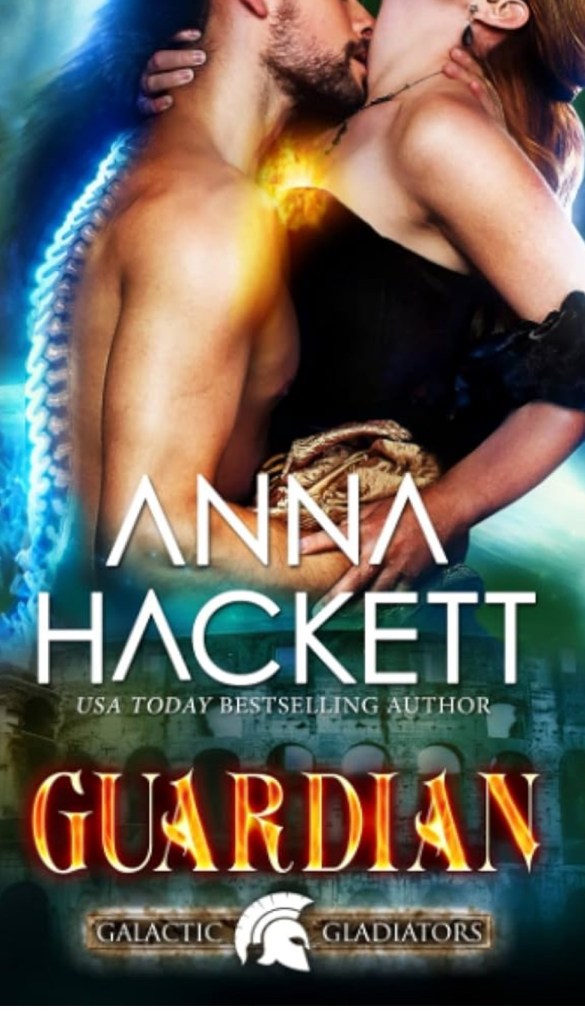
Reading Guardian by Anna Hackett feels like diving headfirst into a storm of action, passion, and the relentless pull of a world on the brink of survival. I found myself on the edge of my seat, eyes scanning frantically across each page, craving to know more about the fierce warrior at the heart of the story and the world around him. Hackett’s ability to craft a fast-paced plot without sacrificing emotional depth is something that never ceases to amaze me, and Guardian delivers this promise in spades.
From the moment I stepped into this novel, the stakes were set high. We’re thrust into a dystopian world where survival isn’t just a matter of battling external forces but also navigating the complex terrain of trust, loyalty, and personal vulnerability. For me, it wasn’t just the adrenaline-packed action scenes that kept me hooked, though they are undeniably pulse-pounding; it was the emotional arc of the characters that truly captured my attention.
Hackett has an undeniable gift when it comes to her characters, and this was evident once again in Guardian. The titular guardian, a force to be reckoned with, is not just a muscle-bound warrior but a man carrying the weight of his past and a responsibility that extends beyond his physical capabilities. His layers were what truly drew me in—because underneath that tough exterior is a person battling demons, fears, and a fierce sense of duty.
And then there’s the world Hackett has created. It’s brutal and unforgiving, yet vivid and textured in a way that made it feel so tangible. The barren wastelands, the towering remnants of a civilization long gone, and the constant threats lurking around each corner gave me a deep sense of tension throughout. Hackett paints her settings with a brush dipped in both destruction and hope, making me yearn for a better future for these characters even when the odds seemed overwhelmingly against them.
But let me backtrack for a moment and talk about what really made Guardian special for me: the relationship dynamics. If you’ve read any of Hackett’s other work, you’ll know that she has a talent for writing romance that’s both intense and heartfelt, and that holds true here as well. The bond between the protagonist and his love interest is sizzling, yes, but what elevates it is the emotional tension simmering beneath the surface. These characters aren’t just thrown together for the sake of a love story; they earn each other’s trust, often through shared moments of vulnerability that made me feel deeply invested in their journey.
This relationship felt especially poignant because it wasn’t just about physical attraction. It was about two people who have been hurt, shaped by a world that’s constantly at war, and who are trying to navigate their way through that pain to find solace in each other. There’s a complexity to their interactions, a push-and-pull that had me hooked, and Hackett’s ability to balance these moments with the ongoing action was impressive.
One of the standout aspects of Guardian is how Hackett makes the personal stakes as high as the broader, world-saving stakes. The story is not just about defeating the bad guys or surviving another day. It’s about reclaiming one’s humanity in a world that often forces you to abandon it. The guardian is a perfect embodiment of this struggle. His internal battles were, at times, even more compelling than the physical ones. There were moments where his inner turmoil—his desire to do what’s right, even when it seemed impossible—resonated with me deeply.
The action, of course, is top-notch. Hackett’s fight scenes are always a masterclass in intensity and pacing, and Guardian is no exception. The battles are visceral, with every punch, kick, and weapon clash feeling impactful. But what I appreciated the most was that these scenes never felt gratuitous. They served a purpose, driving the plot forward and revealing more about the characters, their motivations, and their emotional states. Hackett knows when to dial up the intensity and when to let her characters—and her readers—breathe.
Speaking of the broader world, I found Hackett’s vision of the dystopian future compelling. It’s a world stripped of the comforts and conveniences we take for granted, where survival is a daily struggle and the line between friend and foe is constantly shifting. There’s a palpable sense of danger lurking at every turn, and that unpredictability made the novel all the more thrilling. I appreciated how Hackett didn’t shy away from showing the brutality of this world, but she also gave us moments of beauty and hope—small glimpses of a better future that the characters are fighting for.
In terms of pacing, Guardian moves at a breakneck speed. Hackett wastes no time in plunging the reader into the thick of things, and from there, it’s a non-stop ride. But while the pace is fast, it never felt rushed. Hackett expertly balances the action with quieter, more introspective moments, giving the reader a chance to catch their breath while also deepening the emotional stakes.
One thing I found particularly effective was the way Hackett weaves in themes of redemption and second chances. The guardian isn’t a perfect hero—far from it. He’s made mistakes, both in his past and in the present, and part of his journey is learning to forgive himself and others. There’s a strong theme of personal growth throughout the novel, and it’s not just limited to the protagonist. Other characters, too, are grappling with their own demons, and watching them evolve over the course of the story was incredibly satisfying.
The dialogue, as always, is sharp and snappy. Hackett has a knack for writing banter that’s both humorous and heartfelt, and there were plenty of moments where I found myself smiling at the exchanges between the characters. At the same time, the more serious conversations—particularly those dealing with loss, grief, and hope—were handled with care and emotional weight.
As for the supporting characters, Hackett does a great job of fleshing them out, making them feel like more than just background players. Each character has their own distinct personality and motivations, and while the focus is primarily on the guardian, the presence of these secondary characters adds depth to the world and the story. I especially appreciated how Hackett didn’t rely on stereotypical tropes for her characters; they felt real and complex, with their own struggles and arcs.
The emotional resonance of Guardian is what will stay with me long after the final page. Hackett has a way of making her characters’ pain and triumphs feel so real, and I found myself deeply moved by certain moments. There’s a rawness to the emotions in this book that caught me off guard at times, in the best possible way. It’s not just a story about survival; it’s a story about healing, about finding hope in the darkest of places, and about the power of love and loyalty to transcend even the harshest of realities.
In conclusion, Guardian is a masterful blend of action, emotion, and world-building that showcases Anna Hackett at her best. It’s a gripping, heart-pounding ride that had me fully invested from start to finish. The characters are richly developed, the romance is intense and well-earned, and the action is thrilling without being overwhelming. But above all, it’s the emotional depth of the story that left the biggest impact on me. If you’re a fan of dystopian romance with strong, multi-dimensional characters and a plot that keeps you on your toes, then Guardian is a must-read.
Hackett’s ability to balance high-stakes action with heartfelt character development makes this book an unforgettable journey, and I can’t wait to see where she takes us next in this world. I highly recommend Guardian to anyone looking for a story that’s not only exciting but also deeply emotional, with characters who will stay with you long after the story ends.


 Chapters on Wheelz
Leave a comment