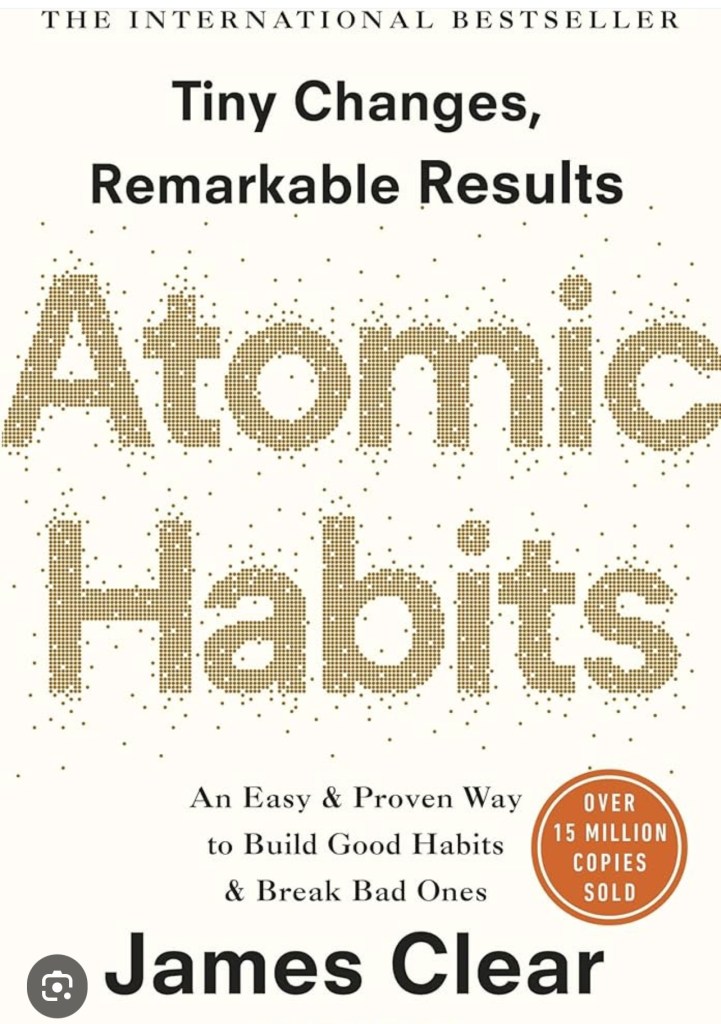
In Atomic Habits, James Clear has delivered something that feels like a manual for anyone trying to improve their life, but instead of focusing on the big, grandiose changes many self-help books tout, Clear zeroes in on the small, seemingly insignificant habits that shape our days. I picked up the book with high hopes—promises of a transformative system for making and breaking habits sounded like just what I needed. And as I read, I discovered that Atomic Habits is more than just a set of guidelines; it’s a philosophy that fundamentally changed the way I view my daily actions and their cumulative effects.
Why Small Changes Matter
One of the most compelling ideas Clear introduces early in the book is that habits compound over time. It’s an idea so simple yet so powerful. We tend to think of major life improvements as requiring massive effort or radical shifts. Yet Clear shows how it’s the accumulation of tiny habits that leads to significant results. The analogy he uses—comparing habits to the growth of compound interest—is particularly striking. Just as a small sum of money can grow exponentially with time, so too can the effects of our habits. What struck me was how much sense this makes, and yet it’s a mindset we rarely adopt when we try to change our behaviors.
For example, when I wanted to improve my fitness, I used to dive into a workout regime that demanded significant time and energy—one that was ultimately unsustainable for me. After reading Atomic Habits, I realized the flaw in my approach. Clear’s concept of focusing on a “1% improvement” every day seemed manageable, even for someone with a packed schedule like mine. What if instead of trying to work out for an hour every day, I started with just ten minutes? And what if, instead of completely overhauling my diet overnight, I made one small adjustment each week? It’s the kind of incremental change that feels too small to be effective—but that’s the whole point. Over time, these tiny changes lead to significant improvements.
The Four Laws of Behavior Change
Clear breaks down his system into what he calls the Four Laws of Behavior Change, which form the backbone of the book. These laws are designed to help you create good habits and break bad ones. Each law resonated with me in a different way, and I found them immensely practical.
1. Make It Obvious: The first law of behavior change is about designing your environment in a way that makes good habits more visible and bad ones less so. Clear explains that much of our behavior is driven by cues in our environment, often without us realizing it. I’ve always believed that willpower was the key to breaking bad habits, but this first law made me rethink that assumption. The reality is, if you’re constantly exposed to cues that trigger your bad habits, willpower alone may not be enough. For example, I used to keep my phone beside me when working, fully aware that it was the source of endless distractions. After reading Atomic Habits, I realized that removing the cue (my phone) from my workspace made it much easier to stay focused. It’s such a simple change, but it had a profound effect.
2. Make It Attractive: Clear’s second law is about making good habits more appealing. He explains that our brain is wired to respond to rewards, and if we can find a way to pair our habits with something we enjoy, we’re more likely to stick with them. This is where the concept of “temptation bundling” comes in—pairing a habit you need to do with one you want to do. For example, I’ve always struggled with staying consistent with my reading habit, but I love listening to music. Clear suggests pairing the two: now, I read while listening to instrumental music, and it’s made the habit more enjoyable. This law also helped me reframe how I approach bad habits. By making them less attractive—by associating them with negative consequences or removing their immediate reward—I found it easier to reduce them.
3. Make It Easy: This law was a game-changer for me. Clear emphasizes that we should reduce the friction between us and the habits we want to form. Often, we make habits harder than they need to be, which discourages us from sticking with them. I’ve experienced this firsthand. When I decided to start journaling daily, I thought I had to write a full page each time. Naturally, I got overwhelmed and quit after a few days. But after reading Atomic Habits, I realized that I was making the habit unnecessarily difficult. Instead, I lowered the barrier by committing to just writing one sentence per day. By making the habit easy, I built momentum, and soon enough, I found myself writing more and more. The idea of scaling down a habit until it feels effortless is one of the most practical takeaways from the book.
4. Make It Satisfying: The final law is about ensuring that good habits feel rewarding. Clear talks about the importance of immediate gratification and how, in many cases, the benefits of good habits are delayed, while the consequences of bad habits are felt later. For example, eating a healthy meal doesn’t provide an immediate reward in the same way that eating junk food does. To counter this, Clear suggests using reinforcement strategies that provide an immediate sense of satisfaction after completing a habit. One thing I implemented after reading the book was using a habit tracker. It sounds simple, but visually seeing my progress gave me a small boost of satisfaction each day, which motivated me to keep going. On the flip side, I started associating bad habits with immediate dissatisfaction. By framing my choices in this way, I found it easier to make better decisions.
The Importance of Identity
Perhaps the most profound insight from Atomic Habits is Clear’s focus on identity. He argues that true behavior change is identity-based, not outcome-based. This is where I had my biggest “aha” moment. Clear explains that instead of setting goals like “I want to lose weight” or “I want to write a book,” we should focus on becoming the type of person who achieves those goals. This shift in mindset felt transformative for me. I realized that if I wanted to maintain habits long-term, I needed to embody the identity associated with those habits.
For example, instead of telling myself, “I want to be a writer,” I began to think of myself as someone who writes. This subtle change made a huge difference in my consistency. When writing became part of my identity, it felt more natural to sit down at my desk every day. I wasn’t forcing myself to write because I had a goal—I was simply acting in accordance with my identity as a writer.
Clear uses the metaphor of casting votes for the type of person you want to become. Each action you take is a vote for or against your desired identity. This helped me see that even the smallest actions matter because they reinforce who I am at my core. I began to see habits not as chores, but as a way to shape my identity, which made them much easier to maintain.
Systems Over Goals
One of the key takeaways from Atomic Habits is that systems are more important than goals. This was another paradigm shift for me. I had always been a goal-oriented person, setting ambitious targets for myself and feeling disappointed when I didn’t meet them. But Clear’s emphasis on building a system that supports your desired outcomes helped me see things differently. Goals are good for setting a direction, but it’s the system that actually gets you there.
For example, if your goal is to run a marathon, that’s a great long-term target. But it’s the system you put in place—like running a certain number of miles each week—that will get you across the finish line. After reading Atomic Habits, I started focusing less on the end result and more on the daily habits that would lead me there. This approach took the pressure off achieving specific goals and made the process feel more manageable. I wasn’t obsessed with outcomes; I was just working on getting a little better each day, and that shift made all the difference.
The Role of Environment
One of the recurring themes throughout Atomic Habits is the importance of environment. Clear emphasizes that our surroundings play a massive role in shaping our habits, often more than our own motivation or willpower. This was a revelation for me. I had always believed that my success or failure in sticking to a habit was solely a reflection of my personal discipline. But Clear makes a convincing case that if we want to change our habits, we need to change our environment.
For instance, I used to struggle with eating healthier. After reading the book, I realized that my kitchen was filled with cues that triggered unhealthy eating—bags of chips on the counter, sugary snacks within arm’s reach. By redesigning my environment—keeping healthy snacks visible and storing junk food out of sight—I found it much easier to make better choices. This principle applies to any habit. If you want to read more, place books around your home where you’ll see them. If you want to exercise regularly, keep your workout gear in plain sight. Small changes to your environment can have a huge impact on your behavior.
Conclusion: A Blueprint for Lasting Change
Atomic Habits is not just another self-help book. It’s a practical, actionable guide to mastering the small behaviors that shape our lives. What I appreciate most about James Clear’s approach is that it’s grounded in both research and real-world examples, making the advice feel applicable and achievable. The book has fundamentally changed the way I think about habits, and the lessons I’ve learned from it have already started to reshape my life.
Whether you’re looking to break bad habits, build new ones, or simply understand the science behind behavior change, Atomic Habits offers a blueprint for lasting transformation. The small changes I’ve made since reading


 Chapters on Wheelz
Leave a comment