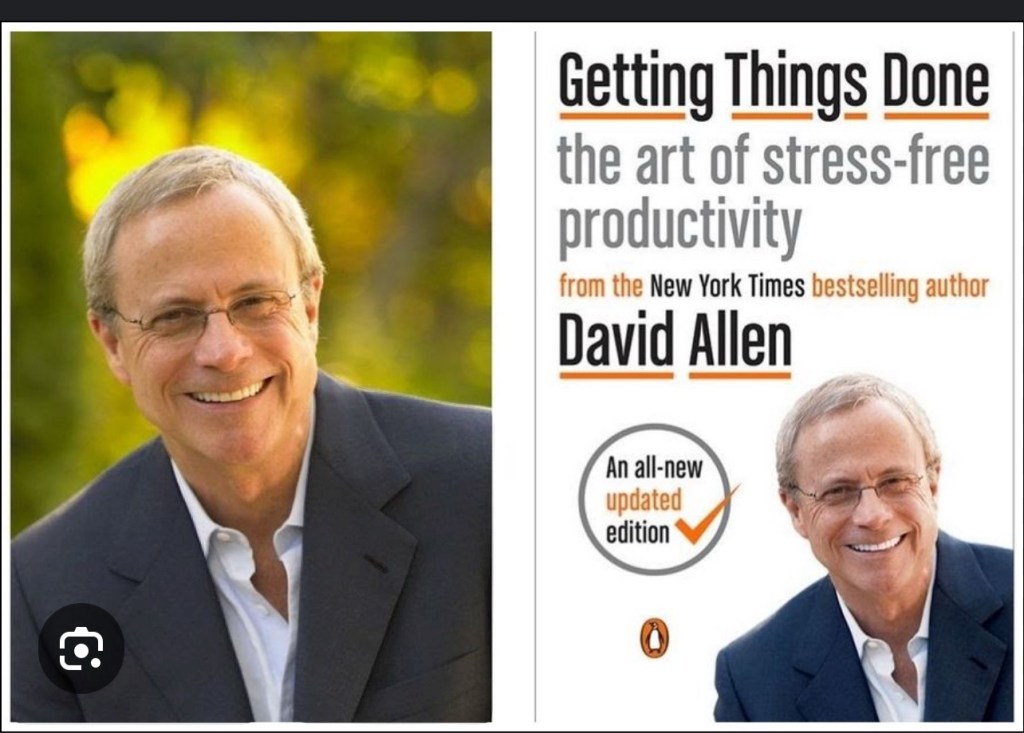
In a world where distractions lurk around every corner, finding a way to harness productivity feels like the ultimate victory. I’ve read my fair share of time-management books, all promising the magic formula for getting more done in less time, but few have left a lasting impression. That was until I picked up Getting Things Done: The Art of Stress-Free Productivity by David Allen.
Initially, I was skeptical. Could a book published over two decades ago still be relevant in today’s fast-paced, tech-driven world? What new insights could Allen possibly offer that I hadn’t already encountered in the productivity space? With a healthy dose of curiosity and a desire to organize the chaos of my own to-do list, I dove into the book headfirst. What I discovered wasn’t just a system for managing tasks—it was a mindset shift that left a profound impact on how I approach work and life.
The Core Idea: Emptying Your Mind
Allen’s entire premise revolves around one concept: our minds are not designed to hold onto the multitude of tasks, reminders, and projects we juggle on a daily basis. Instead, the brain is built for creative problem-solving and strategic thinking. If you’re using mental energy to remember to pick up the dry cleaning or reply to an email, you’re wasting valuable cognitive resources. According to Allen, the key to “stress-free productivity” is freeing up mental space by capturing everything you need to do, in one trusted system, outside of your head.
This concept hit home for me. I realized that my mind had become a cluttered filing cabinet, jammed with incomplete tasks, vague ideas, and constant reminders of what I hadn’t yet accomplished. I was mentally exhausted, not from the work itself, but from the sheer volume of things I was trying to keep track of.
Allen’s advice? Get everything out of your head and onto paper—or into a digital system. The simplicity of this idea is profound. The first step in the Getting Things Done (GTD) system is to “capture” every single open loop—those nagging thoughts of incomplete tasks—so you can free your mind for more important thinking. It was time for me to put this into practice.
Capture: The First Step to Clarity
I started by doing a brain dump, which Allen refers to as “capturing.” Every task, project, email, or idea that had been buzzing around in my mind, I wrote down. The process took a good chunk of time, but as I wrote down each item, I could physically feel the mental load lighten. It was cathartic. The more I captured, the clearer my mind became.
Allen insists that this is not a one-time activity; it’s a habit. By continually capturing anything that comes your way, you ensure that nothing falls through the cracks. For me, this simple step became transformative. Once I got everything out of my head and onto paper, I felt a sense of control and peace that I hadn’t experienced in a long time. But capturing is only the beginning of the GTD system. What follows is processing what you’ve captured—and this is where things got a bit more complex.
Clarify and Organize: Turning Chaos Into Action
Once I had my giant list of captured tasks, Allen’s next step was to clarify what each item actually meant. This involves asking a simple but crucial question: “Is it actionable?” If not, I either trashed it, filed it for future reference, or added it to my “Someday/Maybe” list—a collection of dreams or projects that aren’t urgent but worth revisiting later. If it was actionable, I had to decide on the next physical step to move it forward. Allen calls this breaking tasks down into “next actions,” and it’s one of the most powerful parts of the system.
Breaking things down into smaller, actionable steps sounds obvious, but I realized how often I failed to do this in my day-to-day life. Before GTD, my to-do list might have said something vague like “work on project.” But Allen insists that to be productive, your tasks need to be specific and tangible. So instead of “work on project,” I’d clarify it as “draft outline for the report” or “email Sarah for feedback.” These were actions I could actually take, instead of broad, overwhelming tasks.
Next came organizing these clarified tasks. Allen’s system relies on sorting tasks by context, which at first seemed a little outdated in our modern era of smartphones and laptops. But it actually works. Allen suggests creating lists based on where you need to be or the tools you need to do the task, such as @Computer, @Phone, @Home, etc. Having these context-based lists helped me shift my mindset. Instead of looking at one huge to-do list, I could focus on what I could accomplish in specific situations.
The Power of Context: Efficiency Unlocked
Initially, I thought, “How useful can context-based lists really be?” But I soon realized that working within a context freed me from jumping between unrelated tasks. When I sat down at my computer, I wasn’t distracted by tasks that required a phone call or something I needed to do at home. I just looked at my @Computer list and knocked things out one by one.
This made me significantly more efficient. Instead of working in a haphazard way, bouncing between tasks with no rhyme or reason, I was methodical. At home, I’d pull up my @Home list, and when I had a spare moment in between meetings, I’d check my @Phone list for quick calls I could make. It was like I had compartmentalized the various parts of my life in a way that actually made sense.
Weekly Reviews: The Magic of Maintenance
One of the key components of GTD is the weekly review—a time set aside to review your tasks, update your lists, and ensure that nothing has slipped through the cracks. I’ll be honest: this step was easy to skip. At first, I’d tell myself I didn’t have time for it or that I didn’t need to review my system because I was keeping up with things. But after skipping a couple of weekly reviews, I started to feel the chaos creeping back in. Tasks that I’d captured but not clarified started to pile up, and my lists became cluttered.
When I finally forced myself to sit down and do a proper weekly review, the difference was astounding. I cleaned up my lists, sorted through my inbox, and re-evaluated the importance of some projects. Once again, I felt that same sense of clarity I had after my initial brain dump. The weekly review, I realized, wasn’t just about updating my system; it was a time to reflect on what I had accomplished and recalibrate for the upcoming week. It became a ritual that I looked forward to, a time to reset and refocus.
Reflecting on Priorities: A Life Beyond Tasks
At its core, Getting Things Done isn’t just about checking tasks off a list; it’s about aligning your actions with your goals and values. This was a major takeaway for me. The GTD system provides the tools to handle the minutiae of life so that you can focus on what really matters. By freeing up mental space, I had more energy to devote to the big-picture projects that aligned with my personal and professional goals.
Allen emphasizes the importance of having a clear, organized system not just for the sake of productivity, but for the sake of mental well-being. When your mind is clear, you’re better equipped to be present in the moment, whether that’s at work, with family, or pursuing a passion project. In this way, GTD became more than just a work strategy for me—it became a framework for managing my entire life.
Adapting GTD to Modern Times
Although Getting Things Done was originally published in 2001, its core principles are timeless. That said, I did make some adaptations to fit the digital age. While Allen encourages paper-based lists, I found that using digital tools like Todoist and Evernote helped streamline my system. The key was not to get bogged down in the tools themselves, but to use them as aids in capturing, clarifying, and organizing my tasks.
Another modern adaptation was dealing with the influx of digital distractions—something Allen couldn’t have predicted when he first wrote the book. I applied the GTD principles to managing my email inbox, using folders and rules to categorize incoming messages. This helped prevent my inbox from becoming a source of stress, and I found that I was better able to process emails efficiently, leaving more time for meaningful work.
Final Thoughts: A System for Life
Getting Things Done is more than just a productivity method; it’s a life philosophy. What started as a way to organize my to-do list evolved into a complete mindset shift. I’m no longer mentally burdened by the small, daily tasks that used to weigh me down. Instead, I feel empowered, in control, and better equipped to tackle both the mundane and the monumental.
If you’re feeling overwhelmed, disorganized, or just ready to take your productivity to the next level, I highly recommend Getting Things Done. It’s not a quick fix, and it does require commitment to establish the habits, but the rewards are well worth the effort. For me, the system didn’t just help me get more done—it helped me reclaim my peace of mind.


 Chapters on Wheelz
Leave a comment