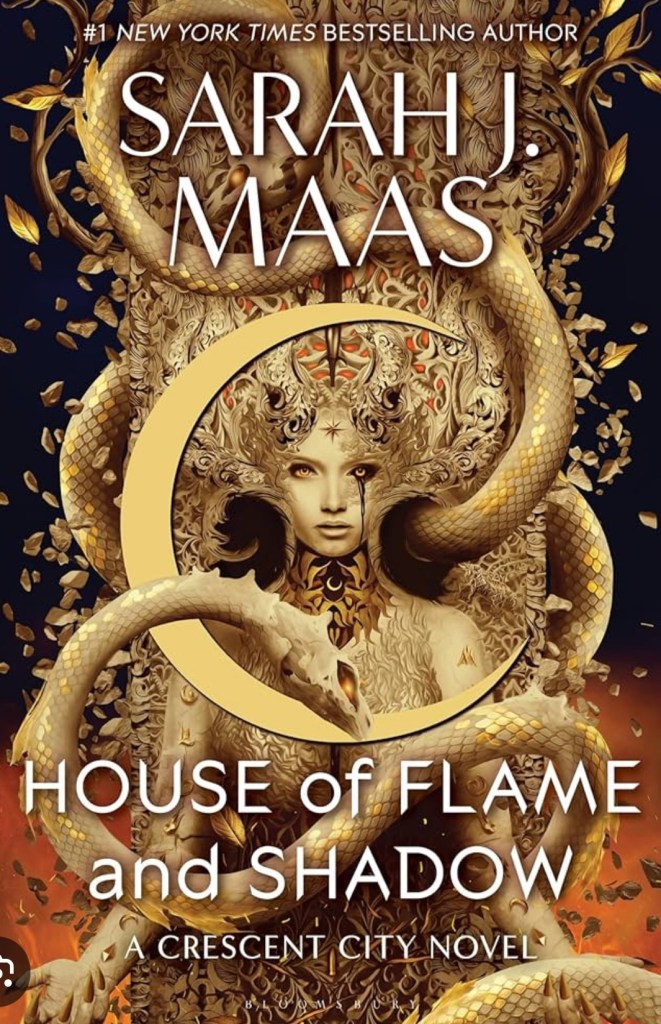
Sarah J. Maas’s “House of Flame and Shadow,” the third installment in the “Crescent City” series, has taken the literary world by storm, exemplifying the burgeoning “romantasy” genre—a seamless blend of romance and fantasy. The novel’s release on January 30, 2024, was met with unprecedented enthusiasm, selling 44,761 copies in its first week and becoming the third fastest-selling science fiction and fantasy title since records began.
Plot Overview
The narrative continues to follow Bryce Quinlan, the half-human, half-Fae protagonist, as she confronts the oppressive Asteri regime. Stranded in a new realm, Bryce is determined to return home and reunite with her allies. Parallel storylines feature Hunt Athalar grappling with captivity and identity, and subplots involving characters like Ruhn and Lidia add depth to the overarching rebellion against the Asteri.
Character Development
Maas excels in crafting multifaceted characters. Bryce’s evolution from a party girl to a formidable heroine is both believable and compelling. Hunt’s internal struggles and the dynamics between Ruhn and Lidia offer nuanced explorations of trauma, trust, and resilience. However, some critics feel that certain relationships, such as Ruhn and Lidia’s, could have been more fully developed, suggesting that the plot’s complexity sometimes overshadows character growth.
World-Building and Plot Complexity
The novel’s ambitious scope is both a strength and a weakness. Maas’s intricate world-building connects the “Crescent City” series to her other works, rewarding long-time readers. Yet, the multitude of subplots and perspectives can feel overwhelming, potentially disrupting narrative flow and reader immersion. The integration of modern elements with traditional fantasy has been described as jarring, indicating a need for a more cohesive setting.
Themes and Reception
“House of Flame and Shadow” delves into themes of loyalty, sacrifice, and the complexities of love and duty. The novel’s romantic elements are well-executed, with Maas balancing passion and emotional depth. However, some readers note a reliance on familiar tropes, which may diminish the impact for those acquainted with her previous works. The book’s climax, involving the destruction of the Asteri, received mixed reactions; while creative, certain resolutions felt conceptually challenging for some readers.
Conclusion
“House of Flame and Shadow” is a testament to Sarah J. Maas’s storytelling prowess, offering a rich tapestry of action, romance, and fantasy. Despite its complexities and occasional predictability, the novel provides a satisfying continuation of the “Crescent City” saga. For fans of the genre, it stands as a noteworthy addition, though newcomers might find the intricate plot and extensive cast a bit daunting.


 Chapters on Wheelz
Leave a comment