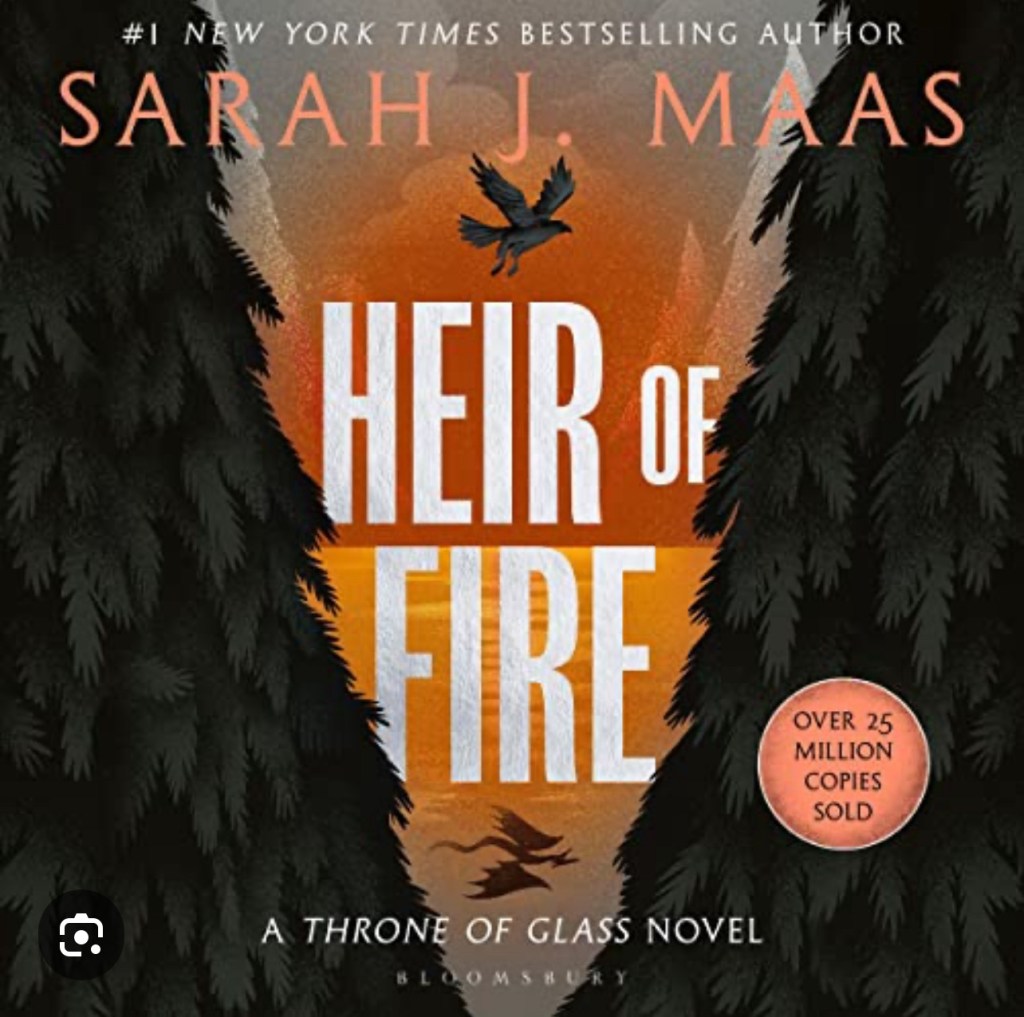
From the very first page of Heir of Fire, I knew this installment of the Throne of Glass series was going to be different. It felt darker, more introspective, and more complex than the first two books. Sarah J. Maas deftly takes us deeper into her world, not just geographically but emotionally, as we follow Celaena Sardothien on a path that is both epic in scale and deeply personal.
What I found immediately striking about this book is how it transforms the tone and structure of the series. While Throne of Glass and Crown of Midnight laid the groundwork, introducing us to a deadly assassin in a cutthroat kingdom, Heir of Fire turns inward. Celaena is no longer the fiery, seemingly unshakable assassin we first met. She’s broken, haunted by her past, and unsure of her future. This shift in her character resonated with me deeply—it added a layer of realism to this otherwise fantastical tale. After everything she’s been through, Celaena is struggling, and it’s refreshing to see a heroine allowed to break down before she can rebuild.
The story largely picks up where Crown of Midnight left off, but with a significant change in setting. We leave behind the familiar court and travel to a new land, a move that Maas uses to expand her world-building dramatically. The world we thought we understood suddenly grows much larger, introducing new characters, cultures, and magical systems that are as enthralling as they are dangerous. What I found particularly enjoyable about this shift is how Maas immerses the reader in the nuances of these new lands without overwhelming us with exposition. Instead, we discover this world as Celaena does, slowly and organically.
One of the strongest elements in Heir of Fire is the introduction of new characters. These are not mere side characters but fully fleshed-out individuals who come with their own histories, motivations, and arcs. Rowan Whitethorn is a standout. His initial interactions with Celaena are tense, sometimes bordering on hostile, but as their relationship evolves, it becomes one of the most compelling aspects of the story. Rowan is a warrior with his own wounds, and the bond he forms with Celaena feels earned—built on mutual respect, shared pain, and a desire for redemption. Maas handles their dynamic masterfully, keeping it slow-burn and free of cliché. It’s refreshing to see a relationship that is complex and multifaceted, rather than just romantic.
Another character who took me by surprise was Manon Blackbeak. She’s one of the new perspectives introduced in Heir of Fire, and at first, I wasn’t sure how I felt about her. She’s cold, calculating, and has a ruthless streak a mile wide. But Maas quickly establishes that there’s more to Manon than meets the eye. As her storyline progresses, I found myself increasingly drawn to her. Manon’s character arc is one of transformation, and it’s fascinating to watch her struggle with the expectations placed upon her versus her own emerging sense of self. Without giving too much away, I can say that her journey is one of the most unexpected and satisfying aspects of the book.
The pacing of Heir of Fire is noticeably slower than its predecessors, but I didn’t see that as a negative. Instead, it felt like Maas was taking her time to really dig into the emotional core of the story. This book is not just about battles and court intrigue—it’s about trauma, healing, and the choices we make when faced with insurmountable odds. Celaena’s journey of self-discovery is not an easy one. There are moments where she is angry, bitter, and even hopeless. But it’s in these moments that her character truly shines. I found myself deeply invested in her internal struggle, even more so than in the external conflicts unfolding around her.
Speaking of external conflicts, Maas also ups the ante in terms of stakes. The world of Erilea is on the brink of war, and the tension is palpable throughout the book. While Celaena is off on her own journey, the court back in Adarlan is dealing with its own set of problems. Dorian, in particular, is a character who continues to grow in fascinating ways. His storyline in Heir of Fire is filled with emotional weight, and I appreciated how Maas doesn’t shy away from exploring the consequences of his choices.
Chaol Westfall, too, has a significant role to play, though I found his character arc to be more of a slow burn. His internal conflict is well-done, as he grapples with loyalty, friendship, and the harsh realities of the world he’s lived in. Watching Chaol wrestle with his identity and his place in the larger conflict was both heartbreaking and satisfying, as Maas doesn’t give him any easy answers. He, like Celaena, is forced to confront the hard truths about himself and his beliefs.
One of the standout elements of Maas’s writing in this book is her ability to balance multiple perspectives without losing momentum. While Celaena’s storyline is the heart of the novel, the other characters’ stories are equally compelling, and each one feels vital to the overarching plot. The world feels expansive, alive with its own history and future, and I loved how the different threads began to weave together by the end of the book.
The magic system in Heir of Fire is also given much more attention than in previous books. We learn more about the history and nature of magic in Erilea, and it plays a crucial role in the development of the plot. Maas does a fantastic job of deepening the lore without bogging down the narrative. Every piece of new information feels like it matters, adding layers to the world and to Celaena’s character. The magic, much like the characters, is unpredictable, and its presence adds a constant sense of danger and wonder.
As the book hurtles toward its conclusion, the stakes continue to rise, and by the final pages, I was left breathless. The last act of Heir of Fire is a masterclass in tension, balancing emotional payoff with the promise of more to come. It left me eager for the next book while also feeling completely satisfied with the journey this installment took me on.
In conclusion, Heir of Fire is a triumph. It’s a story about loss and hope, about finding strength in the face of overwhelming odds. Sarah J. Maas has crafted a tale that is as emotionally rich as it is action-packed, filled with characters who feel real and complex. It’s a journey worth taking, and one that lingers long after the final page is turned.


 Chapters on Wheelz
Leave a comment