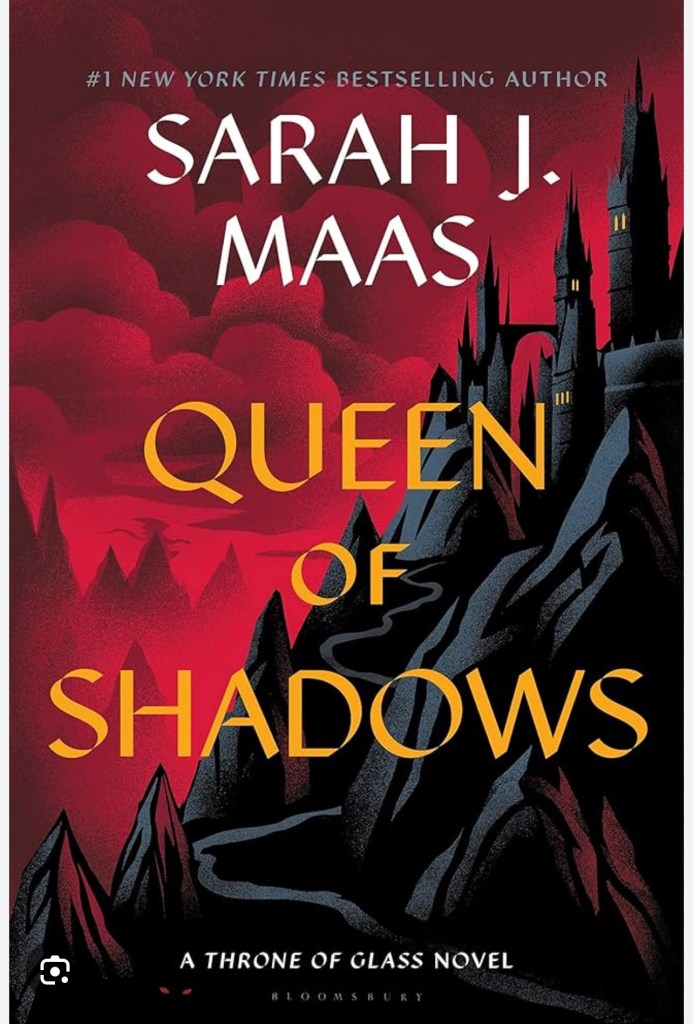
Queen of Shadows, the fourth book in Sarah J. Maas’ Throne of Glass series, is a masterful continuation of a sprawling fantasy epic that grips readers with its evolving characters, high-stakes politics, and emotionally charged moments. As someone who has followed the story from the beginning, Queen of Shadows feels like a monumental shift—a turning point that reshapes everything I thought I knew about the world Maas has crafted.
When I picked up Queen of Shadows, I knew I was stepping into a world brimming with peril, complex alliances, and characters on the cusp of radical transformation. I could feel the weight of everything that had come before: the losses, the victories, the betrayals, and the promises that had yet to be fulfilled. Yet, what struck me almost immediately was the sense of change that permeated the book. This was not just the next chapter in a familiar saga; it felt like the characters and the narrative had reached a new level of maturity, and the stakes were higher than ever before.
From the outset, Maas plunges us back into the heart of her richly imagined world, where kingdoms are teetering on the brink of destruction, and our heroine, Aelin Galathynius, is no longer the person we once knew. I had followed her journey from assassin to queen-in-exile, and Queen of Shadows felt like the culmination of so much growth and hardship. This book allows Aelin to come into her own in ways that are both thrilling and, at times, deeply moving. I found myself constantly reminded of how far she had come—from a seemingly selfish, albeit talented, assassin to a ruler who must balance her desire for vengeance with the responsibilities of leadership. It’s a fine line she walks, and Maas captures the tension of this struggle beautifully.
What I appreciated most about Aelin’s arc in Queen of Shadows is how Maas doesn’t shy away from showing her vulnerabilities. Aelin’s decisions are not always clear-cut or morally black and white. She is a character defined by her fierce loyalty to those she loves, but also by her fierce determination to win at all costs. This duality is explored in-depth here, and I found myself admiring how Maas lets her make mistakes, learn from them, and evolve. Aelin’s interactions with both old friends and enemies feel charged with the weight of past choices, and there’s a sense that every decision she makes could have far-reaching consequences. It’s this underlying tension that makes Queen of Shadows so compelling.
One of the standout elements of this book is the sheer complexity of the supporting cast. Maas has always excelled at creating layered, nuanced characters, and Queen of Shadows is no exception. Several characters, who had previously felt peripheral or underdeveloped, truly come into their own here. Whether it’s through emotional growth, shifting alliances, or facing their own demons, each character is given space to shine in ways that feel both natural and satisfying.
The dynamic between Aelin and her friends—and sometimes enemies—adds depth to the narrative. Lysandra, for instance, is a character who I hadn’t expected to become such a central figure. Her development throughout the book caught me by surprise, and I found myself rooting for her in ways I hadn’t anticipated. Maas has a knack for making secondary characters just as compelling as the protagonist, and this is one of the reasons Queen of Shadows feels so rich. Every character has a role to play, and their individual journeys weave together in ways that feel organic.
Chaol, another key figure in the series, has a particularly difficult arc in this book. His struggles with loyalty, guilt, and his relationship with Aelin are explored in ways that felt poignant and, at times, heartbreaking. I appreciated that Maas didn’t take the easy route with his character—he grapples with his own sense of purpose and place in the rapidly changing world around him. There’s a rawness to his journey that I found deeply human, and while some of his decisions frustrated me, they made sense given everything he has been through. Chaol’s internal battle is one of the emotional undercurrents of the novel, and Maas handles it with a deft touch.
Romantic tensions run high in Queen of Shadows, and while I won’t delve into specifics to avoid spoilers, I will say that Maas strikes a balance between the personal and the political. Relationships are tested, deepened, or irrevocably changed, and these shifts feel earned. Maas doesn’t rush these developments; instead, they unfold naturally as part of the characters’ growth. The emotional beats hit hard because they’re grounded in the characters’ pasts, their traumas, and their desires for the future. It’s this careful attention to emotional detail that makes the romantic elements of the book so compelling, even when they’re fraught with tension and uncertainty.
As much as Queen of Shadows focuses on character development, it doesn’t skimp on action. The pacing of the book is relentless in the best way possible. Battles, both physical and strategic, are plentiful, and Maas excels at choreographing scenes that are as thrilling as they are dangerous. The high stakes are palpable throughout, and there were moments when I genuinely feared for the fate of some of the characters. The blend of political intrigue, warfare, and personal vendettas keeps the tension taut from beginning to end. Maas doesn’t let up, and it’s this intensity that makes the book difficult to put down.
The world-building, too, remains a standout aspect of the series. Maas continues to expand the scope of her world, revealing new layers of history, magic, and myth. In Queen of Shadows, we learn more about the intricate web of power and politics that governs the various factions, and it’s fascinating to see how these elements intersect. The magic system, in particular, becomes even more integral to the plot, and Maas explores its darker aspects in ways that are both intriguing and terrifying.
By the time I reached the final pages of Queen of Shadows, I felt like I had been on a journey that was as emotionally exhausting as it was exhilarating. The book leaves you with a sense of satisfaction—there are major payoffs for storylines that have been brewing since the beginning of the series—but also with an eagerness for what’s to come. There’s a clear sense that the story is far from over, and the future holds even more challenges for Aelin and her allies.
In conclusion, Queen of Shadows is a stunning entry in the Throne of Glass series. Sarah J. Maas weaves together a tale of power, vengeance, loyalty, and sacrifice, all while delivering rich character development and heart-pounding action. It’s a book that showcases Maas at her best—complex, emotional, and utterly engrossing. If you’ve been following the series up to this point, Queen of Shadows will not disappoint.


 Chapters on Wheelz
Leave a comment