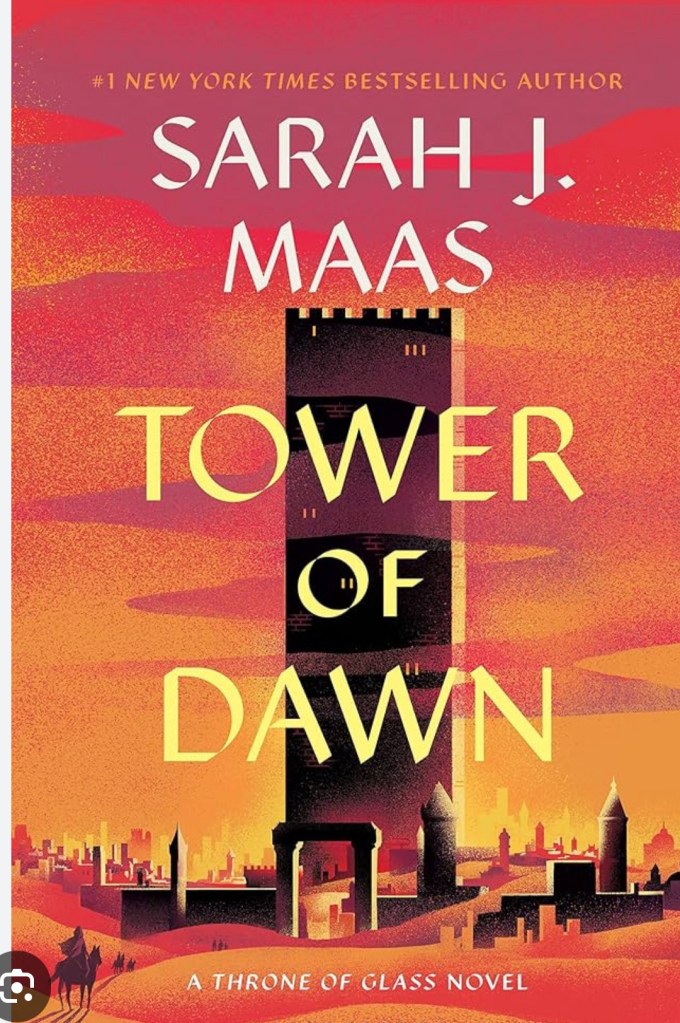
“Tower of Dawn” by Sarah J. Maas is a book I went into with a bit of hesitation, and perhaps that’s a sentiment many share. It’s not because I didn’t trust Maas’ ability to craft an engaging story—her previous works had already cemented her as a powerhouse of the fantasy genre. But because this book was, at least initially, unexpected. This isn’t a continuation of the main storyline
of Throne of Glass, nor does it feature the protagonist, Aelin Galathynius, who many readers had grown attached to over the series. Instead, Tower of Dawn takes a detour to follow Chaol Westfall, a character who had, in the previous installments, been more of a supporting figure. For a series as intense and far-reaching as Throne of Glass, this felt like a risk, but I was pleasantly surprised by how it turned out.
The story picks up after the dramatic events of Queen of Shadows, where Chaol’s life has been forever altered. Without giving too much away, Chaol is physically and emotionally wounded, and the main premise of Tower of Dawn is his journey of healing—both in the literal sense and in a deeper, more personal way. He’s sent to the southern continent, to Antica, in hopes that the famed healers of the Torre Cesme can help him recover. Alongside him is Nesryn Faliq, another character who, until this book, was present but not fully explored. Here, she steps into a larger role, and through her, we see yet another layer of the world Maas has crafted.
One of the things that immediately stands out in Tower of Dawn is the setting. The southern continent is a stark contrast to the lands we’ve traveled in the previous books. Antica, the city where much of the story takes place, feels rich and vibrant, with a culture distinct from the kingdoms we’ve previously encountered. Maas does a fantastic job of immersing the reader in this new environment, with its intricate political structures, historical depth, and unique customs. The healers of the Torre Cesme, in particular, are fascinating. Their role in the city and their powers are crucial to the narrative, and their order adds another dimension to the already complex magic system Maas has created.
The real heart of this novel, though, is Chaol. I have to admit, I had mixed feelings about him in the previous books. He had moments of brilliance, but there were also points where his actions frustrated me. However, in Tower of Dawn, Maas delves deep into his psyche, making him one of the most fully realized and complex characters in the series. His physical injury is a significant plot point, but it also serves as a metaphor for his internal struggles. Over the course of the book, we see him confront not just the pain in his body, but the guilt, shame, and unresolved issues that have been festering for several books now. His journey is raw, difficult, and at times heartbreaking, but it’s ultimately a story of redemption and growth. This focus on character development is one of the book’s greatest strengths.
Nesryn also comes into her own in Tower of Dawn. Previously, I didn’t feel like I had a strong sense of who she was, but here, she’s given the space to shine. Her storyline runs parallel to Chaol’s but explores different themes of duty, loyalty, and identity. She’s a quiet but strong presence, and it was refreshing to see her stepping into her own agency and dealing with the challenges she faces.
Another standout aspect of Tower of Dawn is its pacing. Despite the shift in focus from the main Throne of Glass narrative, Maas keeps the tension high. This book is not merely a side quest; it’s integral to the overarching story. The political intrigue in Antica is layered and intricate, and as usual, Maas is adept at weaving together multiple subplots. The rulers of Antica, the royal family, are all intriguing characters with their own motivations and secrets. The Khagan, in particular, is a figure who looms large over the narrative, and the way Maas sets up the dynamics between the siblings vying for power is one of the highlights of the book.
I also have to mention the themes of healing and recovery that run through the novel. In many ways, Tower of Dawn is quieter and more introspective than the other books in the series, but that doesn’t make it any less compelling. The process of healing, both physical and emotional, is portrayed in a nuanced and respectful way. Chaol’s struggles with his injury and the way he wrestles with his sense of self-worth and identity are particularly poignant. It’s a rare thing to see a character’s physical limitations explored in such a meaningful way in fantasy, and I appreciated how Maas didn’t shy away from the more difficult aspects of his recovery.
One of the things that surprised me most was how much this book deepened my understanding of the wider world Maas has created. Through Chaol and Nesryn’s journey, we learn more about the southern continent’s history, its political system, and its relationship to the rest of the world. There are moments when information revealed in Tower of Dawn sheds new light on events and characters from the previous books, and by the end, it’s clear that this isn’t just a detour—it’s a crucial piece of the puzzle.
If I had to point out one potential drawback, it’s that this book might feel like a slower read for those expecting the same kind of relentless action that characterized earlier entries in the series. While there are certainly moments of tension and suspense, the emphasis here is on character development, healing, and political intrigue rather than fast-paced battles. However, I found this change in pace refreshing, and it gave the characters, especially Chaol, the room they needed to grow.
In the end, Tower of Dawn won me over. What started as a book I wasn’t sure I needed ended up being one of the most emotionally resonant entries in the Throne of Glass series. It’s a story about redemption, healing, and finding strength in unexpected places. If you go into it with an open mind and a willingness to explore new aspects of the world Maas has created, you’ll find it’s a deeply satisfying read.


 Chapters on Wheelz
Leave a comment