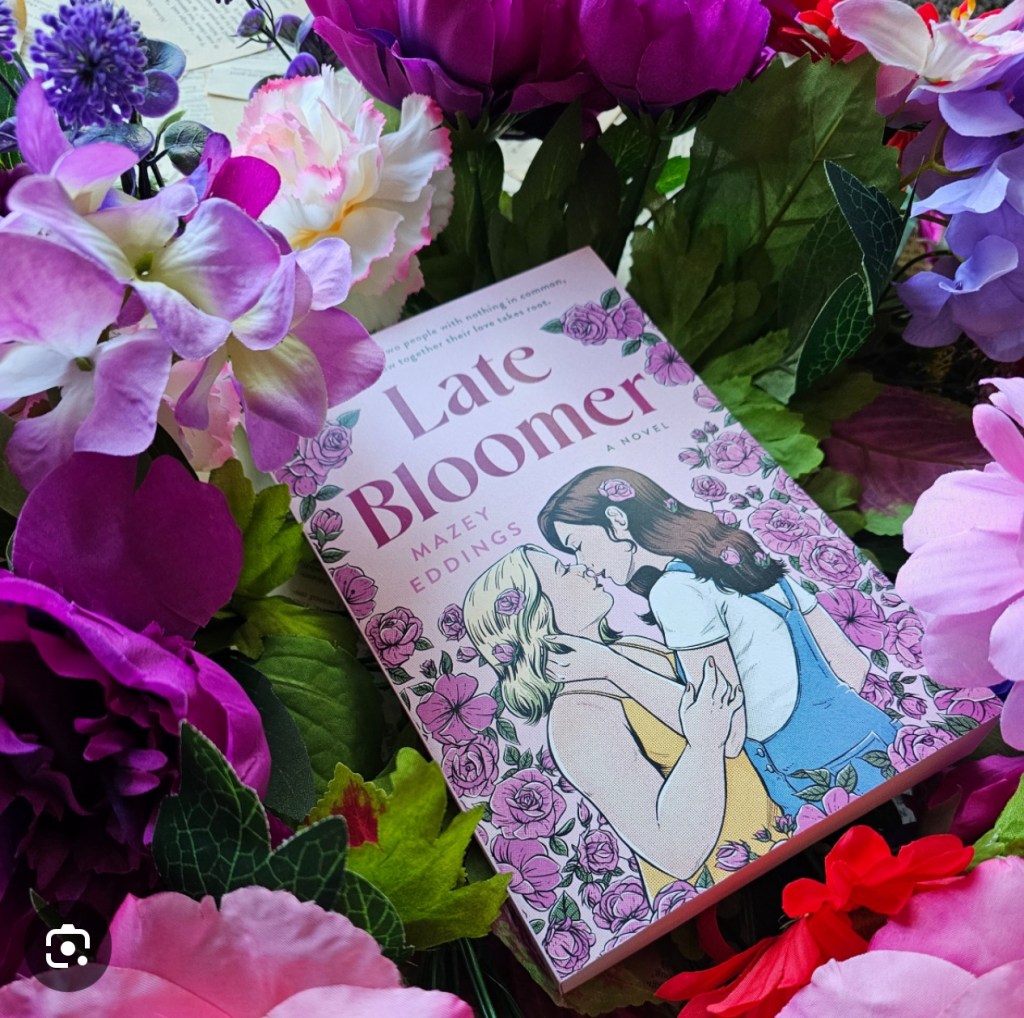
When I first picked up Late Bloomer by Mazey Eddings, I wasn’t entirely sure what to expect. The blurb hinted at a romance, but there was also this undercurrent of self-discovery that intrigued me. As someone who has always been a sucker for stories where characters learn about themselves as much as they learn about love, I dove in. What I didn’t anticipate was how much this book would resonate with me on a personal level.
From the very first page, the writing style pulled me in. There’s something about Eddings’ prose that feels effortless, like you’re sitting across from a friend who’s recounting their life over a cup of coffee. It’s intimate and warm, yet never shies away from digging into the deeper, often messier aspects of life. Her voice feels authentic, and it’s clear that this is a story that comes from a place of lived experience or deep empathy. As I read, I often found myself pausing to reread certain lines, savoring the way she captured emotions that I too have felt at various points in my life.
The protagonist in Late Bloomer is someone who doesn’t fit into the mold of your typical romantic heroine. She’s quirky, deeply introspective, and grappling with feelings that are often brushed aside in other romance novels. One of the things I appreciated most about this book is that it takes its time to explore her internal world. So often, characters in romance novels are defined solely by their relationships with others. They’re either pining after a love interest or overcoming some external obstacle. But here, much of the focus is on the protagonist’s relationship with herself—how she sees herself, how she feels about her place in the world, and how she contends with the societal pressures of being a “late bloomer.”
This idea of being a “late bloomer” is at the heart of the story. We’ve all heard the phrase, but Eddings manages to give it new depth. Through her protagonist, she tackles the fear and uncertainty that come with not fitting into society’s timelines. Whether it’s career success, finding love, or even understanding your own identity, there’s this unspoken expectation that by a certain age, we should have it all figured out. But what if you don’t? What if you’re still trying to understand who you are when everyone around you seems to have their life together? These are the questions the protagonist wrestles with, and as someone who has often felt out of sync with these so-called timelines, it struck a chord with me.
One of the things that makes Late Bloomer stand out in the romance genre is how it doesn’t rush its romantic plot. Don’t get me wrong—there is definitely romance here, and it’s written beautifully. The chemistry between the characters is palpable, and Eddings does a fantastic job of building tension in a way that feels natural and unforced. But unlike other romance novels, where the love story is often the primary engine driving the plot, Late Bloomer allows room for the protagonist to grow outside of her romantic relationships. Her personal development feels just as important, if not more so, than the romantic plotline.
The supporting characters are equally well-drawn, and they contribute to the richness of the story. Each one serves a purpose beyond simply being a foil for the protagonist. There’s a real sense of community in the book, but it’s a community that’s messy and complicated. Friendships are tested, family dynamics are explored, and there are moments where misunderstandings lead to genuine emotional conflict. What I found particularly refreshing was how the novel portrayed friendships and familial relationships as evolving, just like romantic relationships do. There’s no static “happy ever after” here, and that realism made the story all the more compelling.
Now, I want to talk about how Eddings handles mental health in this book, because it’s one of the aspects that stood out to me the most. Mental health struggles are woven into the fabric of the protagonist’s journey, but they’re never sensationalized or treated as mere plot devices. Instead, they’re acknowledged with nuance and care. The way Eddings describes moments of anxiety or self-doubt feels incredibly real. There were passages where I found myself nodding along, thinking, “Yes, that’s exactly how it feels.” The protagonist’s struggles with her mental health aren’t something to be “fixed” by falling in love or achieving some external goal. Rather, they’re a part of who she is, and the book treats that with the dignity it deserves.
The pacing of the novel is another element that I want to highlight. Late Bloomer is not a whirlwind romance where the characters meet, fall in love, and live happily ever after within a matter of days. Instead, the story unfolds at a pace that mirrors real life. There are highs and lows, moments of joy and moments of uncertainty. It feels authentic in a way that many romances don’t. Life is messy, and love is even messier, and Eddings captures that perfectly.
As I neared the end of the book, I found myself reflecting on my own journey. Eddings has a way of writing that invites introspection without being heavy-handed. While the book is very much the protagonist’s story, it also encourages the reader to consider their own path. Have I been too hard on myself for not hitting certain milestones? Have I allowed external pressures to dictate how I feel about my accomplishments? These are the questions I was left pondering, and I think that’s a testament to how powerful this book is.
By the time I finished Late Bloomer, I wasn’t left with the usual post-romance book hangover. Instead, I felt a sense of quiet satisfaction. This isn’t a story that wraps up neatly with a bow, and I wouldn’t have wanted it to. Life, after all, rarely offers such tidy resolutions. But what Late Bloomer does offer is hope. Hope that it’s okay to grow at your own pace, to figure things out in your own time, and to embrace the journey, however unpredictable it may be.
In conclusion, Late Bloomer is more than just a romance—it’s a story of self-discovery, of finding your voice, and of learning to love yourself, flaws and all. Eddings has crafted a narrative that feels deeply personal yet universally relatable. For anyone who’s ever felt like they’re behind in life, this book is a gentle reminder that there’s no one right way to bloom.


 Chapters on Wheelz
Leave a comment